Author: cbmstage

  • Article Directory SEO: Effective or Ineffective?

    Article Directory SEO: Effective or Ineffective?

    Article directory SEO is something that seems to have positive optimization effects for off-page campaigns. But after the Panda and Penguin updates, the question of their effectiveness has been the subject of much speculation. Since Google doesn’t often share much of its inner workings, it is difficult to gauge how much impact article directory SEO has on a target site. Even sites which promote using these platforms as an SEO strategy differ on which are the best article directories for SEO. Likewise, there’s a nearly constant pole-position switch among top article directories for SEO.
    Article Directory SEO: Pros and Cons

    The self-evident pros of using article directory SEO is that sites can spread backlinks among various venues. But if those venues don’t have a strong page rank or border on link farms, then they don’t have much optimization benefits. There are places where article directory SEO can pay off, if used properly. But even these aren’t given the green light by industry experts. It isn’t an effective SEO strategy going back to 2011, according to Google’s chief webspam engineer, Matt Cutts.

    Effect Article Marketing

    For any article directory SEO to be effective, it must have a coherent strategy. That disqualifies article spinning straight away. It also means repurposing isn’t going to garner any worthwhile results. Duplicate anchor text is one reason and of course, duplicate content only helps to hurt. That leaves only one alternative for real article marketing, and it involves actual work. Without legitimate effort, any article directory SEO will fail to produce traffic.

    Real SEO Strategies

    The paradoxical situation about the Internet is anyone can access any type of information on-demand, instantly. At the same time, search engine optimization takes weeks to produce and months to return on that sweat equity. Optimization just doesn’t kick in the moment links are spread about the Web. Of course, there is a reason article directory SEO is practiced so widely.

    Using Article Directories

    While some directories are a complete waste of time, there are sites which can be worth the effort. Using article directory SEO can capitalize on this, given some carefully crafted methods. While this isn’t an exhaustive list, it certainly is the crux of using article directory SEO.

    • Create real, engaging and insightful content
    • Don’t repurpose content–even original content–across different sites
    • Change-up anchor text from piece to piece
    • Use deep linking and cross linking techniques
    • Avoid implementing article directory SEO on sites which employ nofollow attributes
    • Spread inbound links to the target site’s social media profiles
    • Use latent semantic indexing when crafting articles
    • Follow each directory’s rules

    It is important to keep in mind that article directory SEO is only one part of site optimization. There are literally dozens of other techniques which must be employed even before going off-page. Without these elements, no amount of off-site SEO will produce any discernible benefits.

    If you want to learn more about real search engine optimization and effective SEO techniques that get real results, then contact us for a free, expert consultation. We can tell you how our methods get your site the traffic it needs to make a substantial impact on your business and increase your conversion rates.


  • How to Lift a Manual Penalty by Google

    How to Lift a Manual Penalty by Google

    No one wants to get hit with a manual Google penalty. It essentially means being–at least temporarily–removed from the search engine’s query results page. But in the worst case scenario, it means being removed from Big G’s index, and that spells d-e-a-t-h to practically any website.

    So, what’s the difference, you might ask. Well, Google has what its engineers call a “timeout”. Like a child who breaks the rules, the punishment for a Google penalty is a site being put aside for a period of time. In other words, it’s a temporary suspension from the SERP or search engine results page.

    However, being penalized severely means disinclusion from the search engine’s index. That means being totally removed and probably never to return. These cases are in the extreme minority, but they do happen and that’s what the Panda, Penguin, and EMD or Exact Match Domain updates were and are about.

    What is a Google Penalty?

    There are two types of penalties the search engine imposes: algorithmic and manual. If you were to use a Google penalty checker after your site got hit, it should tell you the source of the problem. And that would lead you to the conclusion as to whether it was an algorithmic penalty or a manual one.

    The difference is, of course, whether the penalization was automatically triggered or put in place by a human being. For instance, the search engine automatically detects copied text. That would lead to a machine-driven Google duplicate content penalty or algorithmic. A manual action is taken when a person places a restriction on a site. The nearby blockquote describes the difference from an insider’s view.

    If you change your site, then after we [at Google]have recrawled and re-indexed the page, and some period after that when we’ve reprocessed that in our algorithms, for the most part, your site ought to pop back up. —Matt Cutts, Google’s Chief Webspam Engineer

    Cutts goes on to describe manual penalties and how they are dealt with. He says that even if the search engine determines a site should be manually penalized, it usually only lasts for a temporary period of time and is not permanent–unless of course, what you’ve done is so egregious, than the penalty will not be lifted.

    What’s more, Cutts states that if your site is affected adversely by an automatic algorithm penalty, a reconsideration request won’t lift that penalty. He says the only way to resolve that situation is to right your site to be in-line with Google’s webmaster guidelines.

    Google Penalty Recovery

    The first thing you have to do is determine which type of penalty is being applied to your site. If it’s a manual one, then your Google penalty recovery time will be short. But if it’s the result of violating the search engine’s webmaster guidelines and therefore automatic, the road to recovery will be a lengthy one.

    Here’s some pointers for lifting a manual Google penalty and a bit of direction for how to make the process a little more easy:

    • Determine what caused the manual action. You can use a Google penalty checker tool, which should help to hone in on the problem. Usually, it’s something that the autonomic signals haven’t really picked-up on. That isn’t to say it’s a vendetta against you personally or your business, but it is to say you’ve done something that wasn’t an exercise in good judgment.
    • Evaluate your site from top to bottom. The biggest problem many who have been manually penalized is there’s more than one trespass. If you’ve bought links, the autonomic software isn’t necessarily going to detect it. Though it’s very likely, it’s not unheard of happening. Go to Google Webmaster Tools to start and locate the source of the problem.
    • Disavow, remove, and clean-up. This is where the search engine’s disavow tool will come in handy. But if it isn’t an inbound linking problem, it could be duplicate content or hidden text, or even keyword stuffing. Although the software usually picks these things up, it could slip by–clean it up immediately.
    • Request a re-submission. You’ll have to submit a reconsideration request directly to Google. It will take a bit of time to receive a response and the penalty lift won’t happen right away. The reason is that the search engine still has to wait for its software to catch-up with the latest change.

    If your site has been penalized by Google and you need to resolve the issue, then contact us. We can help to determine what’s causing your site to be adversely affected by the search engine and get the matter righted.

  • Best SEO Tips for 2013

    Best SEO Tips for 2013

    SEO tips come fast and furious when big algorithm changes happen. This past year has seen a lot of major changes. From Panda and its updates to Penguin and its updates to the Exact Match Domain weight-change, 2012 has seen massive sea changes. As a result, there are a plethora of advice for SEO practices going into the new year. And 2013 promises to have a new set of changes in how search engine optimization will work.

    We’ve decided to simplify things a bit. So, we’ve taken a serious look at a compilation of the latest SEO tips and boiled them down into one message. The truth is, you don’t need to wade through dozens or scores of SEO tips and tricks to be in-the-know. But what one can surmise when taking into account the top SEO tips of this year is there’s a single over-arching theme.

    With this in mind, we’ve taken the best SEO tips out there and boiled the top 10 SEO tips by industry leaders down into one message. And that message is: diversify.

    Optimization in 2013

    Whether you know or don’t know anything about Google’s big 2012 updates named Panda, Penguin and EMD, there’s a clear point Big G is getting across in no subtle way. The search giant is telling websites to produce great content and optimize for humans, not robots. That being said, there are certain elements which have not changed. While keyword density has been down-weighted to the point it’s either useless or harmful, other facets of traditional optimization remain important ranking factors.

    Social signals have been given a large boost by Bing and Google. Essentially, SEO is adapting to several changes that have long been in the works. And that means taking a more diversified approach to SEO.

    SEO Tip: Diversify

    Diversification is a very common term in money management and financial planning. Be it Certified Financial Planners, Certified Public Accountants, tax attorneys or a stock broker, the concept of diversification is the quintessential principle in the world of money.

    SEO is no different, particularly going into 2013. The various algorithmic updates over the course of this year can’t mean anything else. The sole job of a search engine is to return the most relevant, most informative, most authoritative information available. And to achieve high organic ranking, sites need to fill those needs.

    Here’s how diversification should be addressed going into next year and well beyond:

    • Change-up anchor text. While this might not be a new concept, it’s one that many people just ignore. After all, if your website sells designer handbags, it’s only natural to use “designer handbags” as anchor text. But repeatedly producing anchor text like, “best designer handbags”, “cheap designer handbags”, and “celebrity designer handbags”, is just like producing anchor text like “spammity spam spams”.
    • Vary your links. It’s just as easy to get caught in the same trap as repeating the same anchor text. Links should be built naturally, not on steroids. The best link building campaigns are done thoughtfully and use high quality sites and Web 2.0 properties in the way they’re intended. Link building is evolving into link earning, so quality trumps quantity anytime.
    • Employ different traffic sources. Every website owner wants to be at the top of Google’s organic results on page 1. But the fact of the matter is, things change. While Google may be the dominate search engine, it isn’t the only one. It’s important to think outside of the box and build sources of traffic other than Big G.

    If you’d like to know more about how to diversify your SEO efforts, then contact us. We’ll be happy to speak with you about how to improve your site’s performance and increase its conversion rate.

  • CSS3 – Creating Shapes with pure CSS!

    CSS3 – Creating Shapes with pure CSS!

    Seriously, I don’t understand why it’s so difficult for people to just update their browsers! It is so simple and does us web designers a huge favor. When you update your Internet browser you are opened to a whole new world of design and security. If those are not enough reasons to update, maybe this article will help. I’m going to show you the benefits of CSS3 and how to utilize the new CSS3 in your next web design project.

    Twitter’s Fail Whale is PURE CSS!


    Twitter CSS Fail Whale

    We all know by now that CSS3 and HTML5 are very powerful. CSS3 reduces the need to use images in your designs, which comes in handy too. That’s why I am going to show you how to create shapes with pure CSS. This can come in handy because it is very efficient to utilize CSS in web design because it takes less load off your web hosting servers and offloads the computing to your site visitors CPU (I mean their computer, duh!). In turn this lowers bandwidth of your site and can improve speed, SEO, etc.

    So lets get to the point here, creating freakin’ shapes with only CSS. Rounded corners are created using CSS and nothing else, this eliminates the need for CSS sprites and such. Drop shadows on boxes or behind images, the infinity symbol and others are also created using CSS3. A good site to look for tons of CSS how-to’s is a very well known site, CSS-Tricks. The web developer, Chris Coyer, from CSS-Tricks actually works for a company called WuFoo, that creates online forms for websites. This company is located in Tampa Bay just like XTELWEB. cool huh? (not really) Okay okay, I get it.

    Anyway, CSS-Tricks has a lot of great info on CSS and how to use it in your web design.

    Some of the shapes you can create are:

    • 8 point burst
    • 12 point burst
    • Talk Bubble
    • Pac Man
    • Egg
    • Diamond
    • Infinity
    • Heart
    • Octagon
    • Hexagon
    • Pentagon
    • Star (5 point and 6 point)
    • Parallelogram
    • Triangles (from all angles)
    • Oval
    • Circle
    • Square
    • Rectangle

    So basically if you have a look at this link on CSS-Tricks it goes into more detail about how the shapes are actually created in CSS. Of course, if you hire a web development company to design your website, you will not have to worry about things like this!

  • SEO Dictionary: What is an Algorithm?

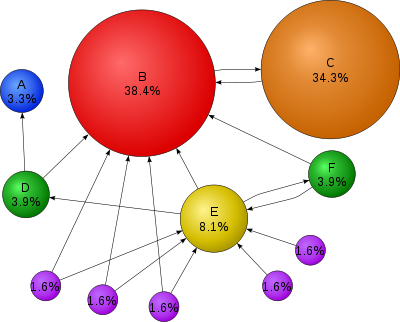
    The proprietary formula (mathematical equation) that a search engine uses to calculate the relevance of a web page to a search word or phrase. Search engines like Google and Yahoo guard their algorithms carefully and constantly adjust them to incorporate new techniques and accommodate cultural changes in search activity.

  • Blogging Your Way Out Of Mediocrity: Tips To Get Started

    It seems that every person and business today has a blog. Everyone wants to get their message out to people on the internet. Successful blogging is a tricky art form, but it can be mastered. Apply this article’s advice, and you’ll have a blog that’s as successful as you would like it to be.

    Make sure your blog incorporates search engine optimization. Your main goal is to get more readers, and in order to do this, you need to ensure that your blog comes up high in the search results for your topics. Using keywords strategically placed in your article and title will draw in more readers.

    It is important that you don’t over-do your use of keywords, imaging and plug-ins. Overloading your blog with these elements will get it de-indexed from search engines results pages, and then all your hard work will have been wasted. Your want to ensure that your style of writing is easy to follow and comes across as natural.

    TIP! Update your blog frequently. The biggest problem with new blogs is infrequent posts.

    Find blogs within your niche and comment on their posts. Keep a folder in Google Reader for your competition and check it daily. It’s a great idea to post regular comments, in fact post them anytime you have something to say!

    You should add to your blog as often as possible. The biggest problem with new blogs is infrequent posts. Readers will become bored quickly if the articles aren’t updated on a regular basis. A great idea is to make a new blog update weekly and update your readers by email.

    As you develop your blog, think about buying a domain name of your own instead of utilizing free sites. Domains do not have to be expensive, and it can help your blog seem more professional. Domain names, especially when they include the actual names of businesses, are generally easier for folks to remember.

    TIP! Don’t ever copy things from the web. Plagiarism is dishonest, and it is the surest way to ruin your reputation and destroy any chance you have of creating a popular blog.

    You do have a life separate from your blog. It is easy to burn out if you spend all your time on the computer, so make sure you devote some time to other activities. Fit normal things like taking walks or visiting friends into your day. Taking a break like this allows you to return to your blog with a fresh perspective so you can write some outstanding content.

    Write a unique blog that stands out from everything that is already online. Having interesting content will increase site traffic. You’ll get the same result by having information that is hard to locate. Try to post about unusual pastimes or knowledge. Give specific details on how to construct widgets. Give the readers a good reason to visit your blog to find the information they want.

    Don’t let your posts become long and rambly. Get right to the point. Providing your readers with plenty of details is important, but if your post is too long, many visitors will tire of reading it. Blog readers typically aren’t interested in reading something that gets bogged down in details. They are looking for the information they seek, not the frilly decorations.

    TIP! Make your blog unique. Being unique and offering an unusual flavor to your content will entice readers.

    Writing A Blog is one of the most popular online activities. The styles and reasons for running a blog are many and varied. Fortunately, any blogger can find their niche on the Internet. Use the suggestions and tips in the above article to have the best blog you can.

  • SEO Tools: Yoono Social Network Bookmarking Tool

    What is Yoono? Yoono is a social network bookmarking tool that allows you to easily maintain your social network profiles in one easy to use location.

    Social Network Bookmarking Tool
    Yoono : Social Network Bookmarking Tool

    Yoono allows you to stay connected to FaceBook, Twitter, AOL Instant Messenger (AIM), Myspace and more all in one place. Using a tool like Yoono is just one of the many different types of social network marketing campaigns you should familiarize yourself with.  Another great feature about Yoono is that you can update your status across all social network mediums at once. This is especially nifty when you are utilize social network marketing in your search engine optimization plan. Not only does Yoono allow you to maintain your social networking profiles, but you can add links, videos and pictures through Yoono too. When it comes to social network marketing, Yoono is priceless, you don’t have to visit each page individually, or remember usernames and passwords because they are stored for you.

    XTELWEB, a Tampa Bay SEO & Website Design company utilizes Yoono to manage their social networking sites. Currently we use FaceBook and Twitter for our social network marketing campaign.  We have three types of Search Engine Optimization plans to get you started to showing on the First Page of Google. Social Network Marketing (SEM) is definitely worth it when it comes to Search Engine Optimization.

    Check out our Search Engine Optimization (SEO) Plans | Contact Us | Tampa Bay SEO & Website Design Company | Free Tampa SEO Tools

  • What do you think about Google Instant Search?

    Google instant is basically the new feature that Google enabled that allows searches as you type.  If you have been living under a rock and have not used Google in the past few weeks then you may not have noticed the change to Googles search engine.

    How it works:

    Basically, when you go to Google.com and start typing in keywords or keyword phrases, Google Instant, well instantly begins to display results after you type the first word.  So if you are looking for “Tampa Movie Theater” then after you type the word, “Tampa” you will instantly see results for everything “Tampa” then when you get to “Movie” you will see results for “Tampa Movie” and so on….

    There is hope:

    Google does allow you turn off the “Instant” part of the search.   Turning off Google Instant is pretty straight forward, you will want to visit your preferences after performing a search and then looking for the option to disable Google Instant.

    What does this mean for website owners?

    If you think about it, this could be devastating for SEO experts.  Now instead of trying to rank high for keywords and keyword phrases, you pretty much need to rank high for everything.  This is definitely going to change the way the Google displays and analyzes its search results.   Some experts are stating that Google instant has killed search engine optimization by enabling this feature.
    No two people will see the same web.  This is what it means now that Google Instant has been implemented.  There was a time when a single search would do the trick, and everyone pretty much saw the same results.  This is what made SEO work.  Now with this, everyone is going to have to start tweaking results in real time.

    Have no fear, XTELWEB is here!

    This is where the true SEO companies are going to shine.  Instead of playing keyword and keyword phrase tricks like most SEO companies do, XTELWEB knows what it means to have fresh, relevant content embedded into its clients website design.  All of the websites we develop are SEO optimized and create a solid foundation to which you can build more and more SEO and social network marketing strategies onto.  Consider our website design the first building block in many that is required to make your website relevant to search engines.  Its only a matter of time before Yahoo! and Microsoft Bing adapt these instant search technologies and change the face of search engine optimization forever.

    If you think about it, this is actually good news for Google.  Now website owners will not be able to rely on keyword tricks plaguing the internet, and for a brief time, until those same owners realize that what they need is relevant content, they will go to pay-per-click campaigns.  Which company do you think they will choose? Google Adwords?

  • Google PageRank Update June 27th, 2011

    Google PageRank Update June 27th, 2011

    Google PageRank June 2011 UpdateIt’s  no lie.  There have been reports that Google has updated its PageRank on sites across the Internet.  According to SEO Roundtable, Google PageRank updates may occur only twice a year.

    We as SEO Professionals know that PageRank does not really affect how a page ranks in search engines, but it is nice to see all your hard work get noticed when Google does do PageRank updates.   There are SEO Professionals that want to get rid of PageRank all together because it creates a false sense of security when it comes to search engine results ranking.

    I guess for now it will have to stay.  I for one do like Google PageRank as it does kind of show you how well a page has authority, at least in the eyes of Google.

  • Easy Keyword Research

    The Internet is an open place, and there are companies out there that have the ability to track keywords and keyword phrases of virtually every site on the net.  This includes your competitors! This is good news for you because now you can research the keywords that are working for them, allowing you to copy and paste their most successful keywords into your own marketing campaigns.

    Starting with the basics, Keyword research is the process of discovering the actual search terms users are typing into search engines when surfing online.  People generally do one of two things online; look for information about something or seeking to buy something.  As Internet marketers, we want to connect with the people looking to buy services or goods.

    Keywords that raise a high level of interest in buying are called keywords with high commercial intent.  A free keyword tool by Microsoft allows you to discover these keywords and phrases.

    Type in the word, “Corvette” into this Microsoft keyword tool and it will tell you the related searches for, “Sale, Club, Wheels, Clubs, C5”  This is good if you have a product or service you are trying to sell or promote because it gives you related searches for that term. There are a bunch of other tools on the Microsoft AdLab website, but this is only one tool we are going to talk about in this article.

    Long tail-keywords are great for turning a generic keyword into a very specific keyword phrase.  The term, “how to eliminate credit card debt” is a good example of a long-tail keyword.    Because there are more words in this phrase, there will be fewer bids on pay-per-click (PPC) advertising, which makes it cheaper to rank at the top.

    Long-tail keywords only make up a small portion of Internet searches.  But when you think of them as a whole, and use variations of them, they can add a significant amount of traffic to your website.  They also add domain authority when it comes to search engines, since long-tail keywords strengthen the theme created by broader phrases. Be sure to add long-tail keywords into your website and Internet marketing campaign when developing your strategy.

    Geographic Targeting:

    Depending on what services you provide, the audience you are trying to target and what you are selling, it is important to include geographic locations into your keyword research.  Keyword phrases like, “Tampa Website Design”, “Sarasota Terrazzo Restoration” and “Entertainment Booking Miami” are important qualifiers for local products and services.

    Considering the ratio of keyword supply to keyword demand is also an important factor.   Keyword demand is basically the number of times a keyword is searched on the Internet in each month.  When looking at Keyword supply, it is basically the number of Web pages that contain that specific keyword or phrase.

    Keyword research tools allow you to see your competitors PPC ads and some show how long they have been running.  You may even discover a few competitors you didn’t know you had.  Some keyword research providers offer free trials to test out their services, and with their paid feature, you also get SEO data of your competitor.

    3 Stages of Keyword Research

    Keyword research can be broken down into three stages.

    The first stage is “Creating Your List” – by doing this it gives you a visualization of what keywords you will be using, and from there you can easily create long-tail and geographic keyword phrases.

    The second state, “Finalizing Your List” – usually involves researching your keywords again, or against any previous months data to ensure your list is solid.

    The third stage, “Taking Action” –  this is where you put your list into action, updating your Google Adwords or other PPC campaign to implement your newly created list.

    A full service SEO Company will do this for you automatically each month.  When you combine your SEO and Website Design Company together, the first step is to modify your HTML code to reflect the new list of keywords, and then modify any PPC campaigns you are running so that both your HTML and PPC are tethered together.  Adding social media marketing to the mix and you have a perfect trifecta for getting more web traffic.

    So when you are ready to hire a full service website design & SEO company to manage your website and SEO campaigns, contact us and we will show you everything we are capable of.  Keyword research is a very small part of implementing SEO into your website to generate leads that eventually turn into revenue.